Posted at 07:27h
in
Articles,
Latest Media
by Nick Enfield
[social_share]
THE PROBLEM IS NOT THAT PEOPLE DON’T CARE. IT IS THAT OUR CIRCLE OF REGARD FOR TRUTH IS IRRATIONALLY SMALL
It is often said that “people don’t care about truth”. But is this really the case? Imagine you are falsely accused of cheating in a test:...
Posted at 02:19h
in
Articles,
Latest Media
by Nick Enfield
[social_share]
When we talk, we follow certain ground rules, which are set out in what philosophers call “language games”. Each game has its own set of rules - but problems arise when not everyone is clear which game is being played.
Perhaps most important is the informing...
Posted at 07:27h
in
Articles,
Latest Media
by Nick Enfield
[social_share]
Science can’t exist without telling a story. The question is not whether we should use it, but how we should use it best
Image: ‘Even if an exemplary scientist has trained herself to be utterly objective, her audience will always bring their biased, story-gobbling minds’ Photograph: ijeab/Getty...
Posted at 03:49h
in
Articles,
Latest Media
by Nick Enfield
[social_share]
21 May 2018
A good number of Australians hate it when people refer to the letter "h" as “haitch”. They hate it with a passion.
While the “haitch” pronunciation is often linked to Irish Catholic education in times when Australian society was divided along sectarian lines, no...
Posted at 02:11h
in
Latest Media,
Video
by Nick Enfield
[social_share]
Q and A
A public lecture delivered at the Nanyang Technology University
Date: 11 December 2017
Time: 2:00pm - 5:30pm
Venue: Discovery Theatrette, Level 4, Matrix Building at Biopolis
Address: 30 Biopolis Street, Singapore 138671
Jointly organised by:
...
Posted at 08:44h
in
Latest Media,
Podcast
by Nick Enfield
[social_share]
[audio mp3="http://nickenfield.org/files/drm_20171204_1915.mp3"][/audio]
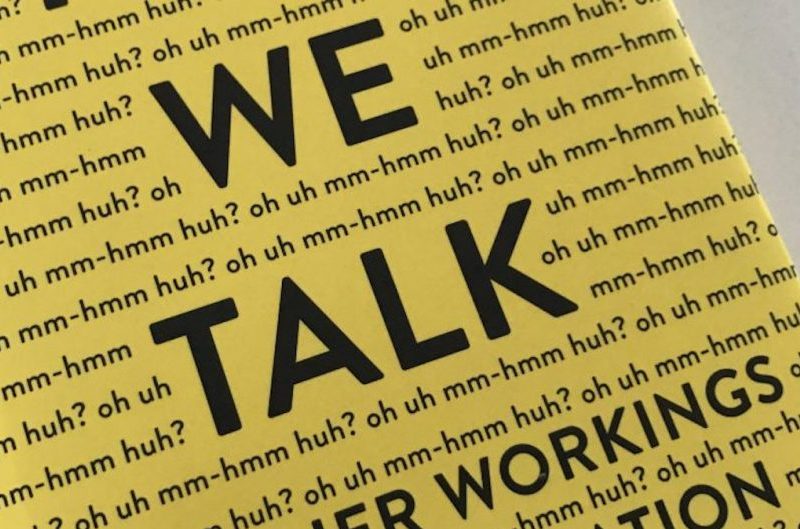
What are the moral obligations of a casual chat?
Why is there value in every 'ummm', 'mm-hmmm', and 'like'?
And does the country you grew up in make a difference in how quickly you reply to a question?
Nick Enfield is the author of a new book,...
Posted at 06:50h
in
Articles,
Latest Media
by Nick Enfield
[social_share]
In our new normal, experts are dismissed and alternative facts flagrantly offered. This suspicion of specialists is part of a bigger problem
Image: March For Science In New York City, 22 April 2017. Photograph: Erik McGregor/Pacific/Barcroft
We often defer to others’ expertise, and for good reason. The...
Posted at 01:31h
in
Latest Media,
Podcast
by Nick Enfield
[social_share]
[audio mp3="http://nickenfield.org/files/aye_20170715_1807-1.mp3"][/audio]
Language loss is a silent phenomenon - creeping and incremental like erosion.
But what precisely do we lose when a language is no longer spoken?
Perhaps we should be asking: what do we keep when linguistic diversity is maintained?
Professor of Linguistics at the University of Sydney,...
Posted at 07:36h
in
Articles,
Latest Media
by Nick Enfield
[social_share]
Image: Public anxiety about the post-truth era inspired a New York Times advertising campaign.
Nick Enfield, University of Sydney
This article is the first in a series from the Post-Truth Initiative, a Strategic Research Excellence Initiative at the University of Sydney. The series examines today’s post-truth problem...
Posted at 01:47h
in
Latest Media,
Podcast
by Nick Enfield
[social_share]
[audio mp3="http://nickenfield.org/files/bay_20160318_1005.mp3"][/audio]
Do dolphins say ‘Huh?’ Do gorillas point out dropped bananas to other gorillas? Do ants quote one another?
Human language is a a uniquely complex combination of social and cognitive capacities.
Professor Nick Enfield explains the latest research on what distinguishes human language, from its cooperative...